Domain addicted-to-innovation.de kaufen?
Wir ziehen mit dem Projekt
addicted-to-innovation.de um.
Sind Sie am Kauf der Domain
addicted-to-innovation.de interessiert?
domain@kv-gmbh.de · 0541-91531010
Domain addicted-to-innovation.de kaufen?
Gibt es ein Open-Source-Text-to-Speech-Modell?
Ja, es gibt mehrere Open-Source-Text-to-Speech-Modelle. Ein bekanntes Beispiel ist das Tacotron-Modell, das von Google entwickelt wurde. Es ermöglicht die Generierung von natürlicher Sprache aus Text und ist in der Open-Source-Community weit verbreitet. Es gibt auch andere Modelle wie WaveNet und DeepVoice, die ebenfalls Open-Source sind. **
Ja, Addicted to Models ist eine vertrauenswürdige Agentur.
Ja, Addicted to Models ist eine vertrauenswürdige Agentur. Sie arbeiten mit professionellen Models und haben eine gute Reputation in der Branche. Ihre Kunden sind zufrieden mit der Zusammenarbeit und den Ergebnissen. Die Agentur legt Wert auf Transparenz und Kommunikation, was sie zu einer verlässlichen Wahl macht. **


Ähnliche Suchbegriffe für Umbreit-Sediment-Source-to
Top-Angebote
Produkte zum Begriff Umbreit-Sediment-Source-to:
-
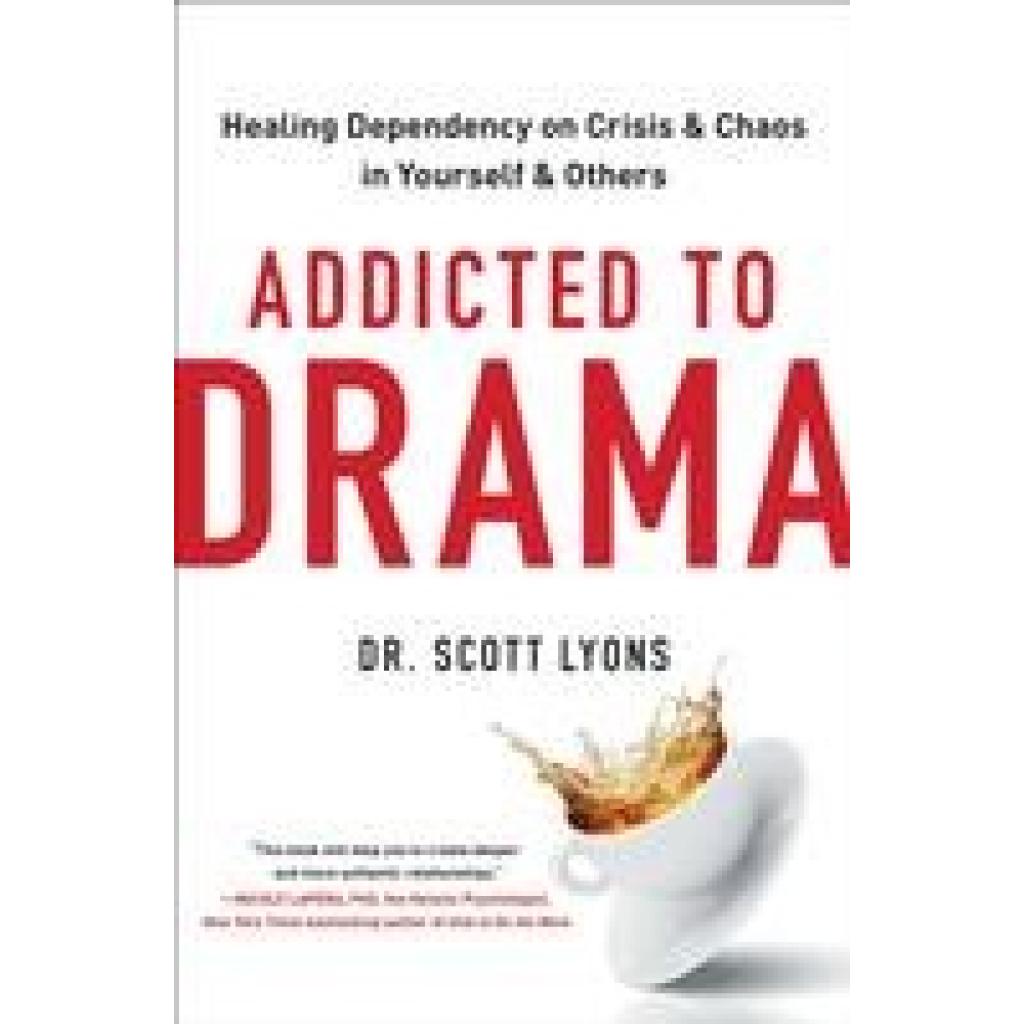
Lyons, Scott: Addicted to DramaAddicted to Drama , Do you know someone who seems to thrive on chaos, a person who manufactures crisis where there is none, makes mountains out of molehills, and whose very presence feels like an inescapable whirlwind? You may even label them a "drama queen." This person might be someone close to you. This person might even be you. In this ground-breaking book, clinical psychologist and mind-body expert Dr. Scott Lyons turns the notion of the "drama queen" on its head, showing that drama is actually an addiction and those who are suffering with it are experiencing a much deeper psychological, biological, and social pain. For a person addicted to drama, the intensity becomes their way of coping. Their life is a constant cycle of crisis, chaos, and chronically high levels of stress. They may never be able to relax without an internal alarm going off, sending them spiralling back toward chaos. Drama is the stirring, the excitement, the exaggeration, the eruption, the unrest, and the medicine to feel alive in relation to the numbing of the internal and external world around them. For a person addicted to drama, the drama is often how they survive-or think they do. With studies, primary research, and patient stories, Dr. Lyons deconstructs this little-understood addiction, sharing: * what drama addiction is and what it is not * how to identify patterns of drama addiction in yourself and others * the somatic effects of drama addiction, including chronic fatigue, autoimmune disease, joint and muscle pains, and other conditions * the origins of drama addiction- and how we are heading towards a global pandemic of a dependency on crisis and chaos * accessible exercises for recovery and healing Rather than dismiss addiction to drama as just attention-seeking, Dr. Lyons offers clear-eyed empathy, humour, and practical strategies to help us all understand and break free of the drama cycle. , > , Erscheinungsjahr: 20230502, Produktform: Leinen, Autoren: Lyons, Scott, Themenüberschrift: SELF-HELP / Compulsive Behavior / General, Keyword: psychologist;drama;primary research;patient stories;addiction;personality disorder;narcissist;narcissistic;borderline;relationships;joint muscle pain;autoimmune;gaslight;sociopath, Fachschema: Englische Bücher / Ratgeber, Lebenshilfe~Hilfe / Lebenshilfe~Lebenshilfe~Psychologie / Emotionen, Sexualität~Gesundheit (psychologisch)~Psychische Erkrankung / Störung~Störung (psychologisch), Fachkategorie: Psychologie: Emotionen~Umgang mit / Ratgeber zu Problemen der geistigen Gesundheit~Emotionen und emotionale Intelligenz~Umgang mit Krankheit~Psychische Störungen~Psychische Gesundheitsvorsorge, Imprint-Titels: Hachette Go, Warengruppe: HC/Ratgeber Lebensführung allgemein, UNSPSC: 49019900, Warenverzeichnis für die Außenhandelsstatistik: 49019900, Länge: 233, Breite: 160, Höhe: 27, Gewicht: 466, Produktform: Gebunden, Genre: Importe,22,93 €*Versand: 0,00 €Sichere Weiterleitung zum Anbieter


-
Kennt ihr ein gutes Open-Source-Text-to-Speech (TTS)-Modell?
Ja, ein bekanntes Open-Source-Text-to-Speech-Modell ist Tacotron. Es wurde von Google entwickelt und ist in der Lage, natürliche Sprache zu generieren. Tacotron ist in Python implementiert und kann für verschiedene Anwendungen verwendet werden, wie z.B. Sprachassistenten oder Hörbücher. **
-
Wann benutzt man im Englischen 'to be supposed to' und wann 'to be expected to'?
Im Englischen benutzt man "to be supposed to", um auszudrücken, was von jemandem erwartet wird oder was er tun sollte, basierend auf Regeln, Vereinbarungen oder Erwartungen. "To be expected to" wird verwendet, um auszudrücken, was wahrscheinlich oder erwartet wird, dass jemand tut, basierend auf der Situation oder den Umständen. Beide Ausdrücke beziehen sich auf Erwartungen, aber "to be supposed to" bezieht sich mehr auf externe Regeln oder Vereinbarungen, während "to be expected to" sich auf allgemeine Erwartungen oder Vorhersagen bezieht. **
-
Wie bildet man das Present Progressive bei "to be able to" und "to be allowed to"?
Um das Present Progressive bei "to be able to" zu bilden, verwendet man die entsprechende Form von "to be" (am, is, are) im Present Progressive und fügt dann "able to" hinzu. Zum Beispiel: "I am able to swim" oder "She is able to speak French". Bei "to be allowed to" bildet man das Present Progressive ebenfalls mit der entsprechenden Form von "to be" (am, is, are) im Present Progressive und fügt dann "allowed to" hinzu. Zum Beispiel: "We are allowed to park here" oder "He is allowed to stay out late". **
-
Wann soll ich 'able to', 'allowed to' und 'have to' verwenden?
Du solltest "able to" verwenden, wenn du die Fähigkeit oder Möglichkeit hast, etwas zu tun. "Allowed to" wird benutzt, um zu beschreiben, dass du die Erlaubnis hast, etwas zu tun. "Have to" wird verwendet, um auszudrücken, dass du verpflichtet bist, etwas zu tun, also keine Wahl hast. **


Wann benutzt man "not to be supposed to" und wann benutzt man "not to be expected to"?
"not to be supposed to" wird verwendet, um auszudrücken, dass etwas nicht erwartet oder erlaubt ist, basierend auf Regeln, Normen oder Erwartungen. Zum Beispiel: "Kinder sind nicht dazu bestimmt, bis spät in die Nacht aufzubleiben." "not to be expected to" wird verwendet, um auszudrücken, dass etwas nicht erwartet wird, basierend auf den Fähigkeiten oder Möglichkeiten einer Person. Zum Beispiel: "Er ist nicht dazu erwartet, alleine eine komplexe Aufgabe zu lösen." **
Wie bilde ich die "going to"-Zukunft?
Die "going to"-Zukunft wird gebildet, indem man die Form von "to be" im Präsens verwendet, gefolgt von "going to" und dem Infinitiv des Verbs. Zum Beispiel: "I am going to study for my exam tomorrow." **
Top-Angebote
Produkte zum Begriff Umbreit-Sediment-Source-to:
-
Umbreit Sediment Source to Sink: Deciphering Sediment Connectivity to Large Dams in Damo (Englisch, Ramkrishna Maiti, SK Asraful Alam) (71885688)Umbreit Sediment Source to Sink: Deciphering Sediment Connectivity to Large Dams in Damo (Englisch, Ramkrishna Maiti, SK Asraful Alam) (71885688)171,19 €*Versand: 0,00 €Sichere Weiterleitung zum Anbieter
-
Springer Sediment Source to Sink: Deciphering Sediment Connectivity to Large Dams in Damodar River Basi (Englisch, Hardcover, Ramkrishna Maiti, SK Asraful Alam) (56624419)Springer Sediment Source to Sink: Deciphering Sediment Connectivity to Large Dams in Damodar River Basi (Englisch, Hardcover, Ramkrishna Maiti, SK Asraful Alam) (56624419)171,19 €*Versand: 0,00 €Sichere Weiterleitung zum Anbieter
-
Lyons, Scott: Addicted to DramaAddicted to Drama , Do you know someone who seems to thrive on chaos, a person who manufactures crisis where there is none, makes mountains out of molehills, and whose very presence feels like an inescapable whirlwind? You may even label them a "drama queen." This person might be someone close to you. This person might even be you. In this ground-breaking book, clinical psychologist and mind-body expert Dr. Scott Lyons turns the notion of the "drama queen" on its head, showing that drama is actually an addiction and those who are suffering with it are experiencing a much deeper psychological, biological, and social pain. For a person addicted to drama, the intensity becomes their way of coping. Their life is a constant cycle of crisis, chaos, and chronically high levels of stress. They may never be able to relax without an internal alarm going off, sending them spiralling back toward chaos. Drama is the stirring, the excitement, the exaggeration, the eruption, the unrest, and the medicine to feel alive in relation to the numbing of the internal and external world around them. For a person addicted to drama, the drama is often how they survive-or think they do. With studies, primary research, and patient stories, Dr. Lyons deconstructs this little-understood addiction, sharing: * what drama addiction is and what it is not * how to identify patterns of drama addiction in yourself and others * the somatic effects of drama addiction, including chronic fatigue, autoimmune disease, joint and muscle pains, and other conditions * the origins of drama addiction- and how we are heading towards a global pandemic of a dependency on crisis and chaos * accessible exercises for recovery and healing Rather than dismiss addiction to drama as just attention-seeking, Dr. Lyons offers clear-eyed empathy, humour, and practical strategies to help us all understand and break free of the drama cycle. , > , Erscheinungsjahr: 20230502, Produktform: Leinen, Autoren: Lyons, Scott, Themenüberschrift: SELF-HELP / Compulsive Behavior / General, Keyword: psychologist;drama;primary research;patient stories;addiction;personality disorder;narcissist;narcissistic;borderline;relationships;joint muscle pain;autoimmune;gaslight;sociopath, Fachschema: Englische Bücher / Ratgeber, Lebenshilfe~Hilfe / Lebenshilfe~Lebenshilfe~Psychologie / Emotionen, Sexualität~Gesundheit (psychologisch)~Psychische Erkrankung / Störung~Störung (psychologisch), Fachkategorie: Psychologie: Emotionen~Umgang mit / Ratgeber zu Problemen der geistigen Gesundheit~Emotionen und emotionale Intelligenz~Umgang mit Krankheit~Psychische Störungen~Psychische Gesundheitsvorsorge, Imprint-Titels: Hachette Go, Warengruppe: HC/Ratgeber Lebensführung allgemein, UNSPSC: 49019900, Warenverzeichnis für die Außenhandelsstatistik: 49019900, Länge: 233, Breite: 160, Höhe: 27, Gewicht: 466, Produktform: Gebunden, Genre: Importe,22,93 €*Versand: 0,00 €Sichere Weiterleitung zum Anbieter
-
Gibt es ein Open-Source-Text-to-Speech-Modell?
Ja, es gibt mehrere Open-Source-Text-to-Speech-Modelle. Ein bekanntes Beispiel ist das Tacotron-Modell, das von Google entwickelt wurde. Es ermöglicht die Generierung von natürlicher Sprache aus Text und ist in der Open-Source-Community weit verbreitet. Es gibt auch andere Modelle wie WaveNet und DeepVoice, die ebenfalls Open-Source sind. **
-
Ja, Addicted to Models ist eine vertrauenswürdige Agentur.
Ja, Addicted to Models ist eine vertrauenswürdige Agentur. Sie arbeiten mit professionellen Models und haben eine gute Reputation in der Branche. Ihre Kunden sind zufrieden mit der Zusammenarbeit und den Ergebnissen. Die Agentur legt Wert auf Transparenz und Kommunikation, was sie zu einer verlässlichen Wahl macht. **
-
Kennt ihr ein gutes Open-Source-Text-to-Speech (TTS)-Modell?
Ja, ein bekanntes Open-Source-Text-to-Speech-Modell ist Tacotron. Es wurde von Google entwickelt und ist in der Lage, natürliche Sprache zu generieren. Tacotron ist in Python implementiert und kann für verschiedene Anwendungen verwendet werden, wie z.B. Sprachassistenten oder Hörbücher. **
-
Wann benutzt man im Englischen 'to be supposed to' und wann 'to be expected to'?
Im Englischen benutzt man "to be supposed to", um auszudrücken, was von jemandem erwartet wird oder was er tun sollte, basierend auf Regeln, Vereinbarungen oder Erwartungen. "To be expected to" wird verwendet, um auszudrücken, was wahrscheinlich oder erwartet wird, dass jemand tut, basierend auf der Situation oder den Umständen. Beide Ausdrücke beziehen sich auf Erwartungen, aber "to be supposed to" bezieht sich mehr auf externe Regeln oder Vereinbarungen, während "to be expected to" sich auf allgemeine Erwartungen oder Vorhersagen bezieht. **
Ähnliche Suchbegriffe für Umbreit-Sediment-Source-to
-
Wie bildet man das Present Progressive bei "to be able to" und "to be allowed to"?
Um das Present Progressive bei "to be able to" zu bilden, verwendet man die entsprechende Form von "to be" (am, is, are) im Present Progressive und fügt dann "able to" hinzu. Zum Beispiel: "I am able to swim" oder "She is able to speak French". Bei "to be allowed to" bildet man das Present Progressive ebenfalls mit der entsprechenden Form von "to be" (am, is, are) im Present Progressive und fügt dann "allowed to" hinzu. Zum Beispiel: "We are allowed to park here" oder "He is allowed to stay out late". **
-
Wann soll ich 'able to', 'allowed to' und 'have to' verwenden?
Du solltest "able to" verwenden, wenn du die Fähigkeit oder Möglichkeit hast, etwas zu tun. "Allowed to" wird benutzt, um zu beschreiben, dass du die Erlaubnis hast, etwas zu tun. "Have to" wird verwendet, um auszudrücken, dass du verpflichtet bist, etwas zu tun, also keine Wahl hast. **
-
Wann benutzt man "not to be supposed to" und wann benutzt man "not to be expected to"?
"not to be supposed to" wird verwendet, um auszudrücken, dass etwas nicht erwartet oder erlaubt ist, basierend auf Regeln, Normen oder Erwartungen. Zum Beispiel: "Kinder sind nicht dazu bestimmt, bis spät in die Nacht aufzubleiben." "not to be expected to" wird verwendet, um auszudrücken, dass etwas nicht erwartet wird, basierend auf den Fähigkeiten oder Möglichkeiten einer Person. Zum Beispiel: "Er ist nicht dazu erwartet, alleine eine komplexe Aufgabe zu lösen." **
-
Wie bilde ich die "going to"-Zukunft?
Die "going to"-Zukunft wird gebildet, indem man die Form von "to be" im Präsens verwendet, gefolgt von "going to" und dem Infinitiv des Verbs. Zum Beispiel: "I am going to study for my exam tomorrow." **
* Alle Preise verstehen sich inklusive der gesetzlichen Mehrwertsteuer und ggf. zuzüglich Versandkosten. Die Angebotsinformationen basieren auf den Angaben des jeweiligen Shops und werden über automatisierte Prozesse aktualisiert. Eine Aktualisierung in Echtzeit findet nicht statt, so dass es im Einzelfall zu Abweichungen kommen kann. ** Hinweis: Teile dieses Inhalts wurden von KI erstellt.